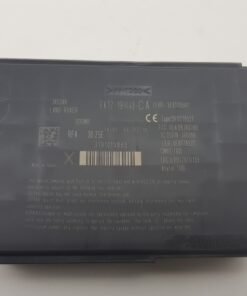


JLR DC-DC Converter Module 48V-12V L8B2 K8D2(P/N: K8D2-14B227-AL)
Introduction: The Critical Role of the 48V DCDC in JLR MHEV Systems
In Jaguar Land Rover’s Mild Hybrid Electric Vehicle (MHEV) architecture, the 48V DCDC converter (part number N8B2-14B227-AC) is a cornerstone component of the electrical system. Unlike a traditional alternator, this bi-directional DCDC is responsible for managing energy flow between the 48V and 12V electrical networks. It ensures the 12V battery is maintained by the 48V battery and, in certain conditions, can support the 48V system using the 12V battery. For technicians, understanding this module is critical as failures manifest as a complete loss of 12V power, battery discharge warnings, and drivability issues, making accurate diagnosis and replacement a frequent and high-stakes task.
Technical Specifications and Operational Theory of the 48V DCDC
Core Function and Specifications
The LR178516 is a high-efficiency, bi-directional converter. Its primary function is to replace the standard alternator. It steps down the voltage from the 48V Lithium-Ion battery pack to ~14.5V to charge the 12V battery and power the conventional 12V vehicle systems. Conversely, it can also step up voltage from the 12V system to support the 48V network during engine cranking or if the 48V battery state of charge is low. Key specifications for the K8D2-14B227-AL unit typically include a continuous output power of around 1.8kW – 2.2kW. It communicates with other vehicle modules, primarily the Battery Energy Control Module (BECM) and the Central Gateway, via the Central Car Configuration (CCC) or a dedicated CAN network, receiving commands and reporting status, voltage, current, and temperature data.
Hypothetical Step-by-Step Diagnostic and Replacement Process
Disclaimer: This is a generalized procedure. Always consult TOPIx for the latest vehicle-specific safety and repair instructions. High-voltage system safety protocols must be strictly followed.
- Safety First: Disconnect the 12V battery. Follow JLR’s prescribed procedure to safely disable the high-voltage system, which includes isolating the 48V battery.
- Initial Diagnosis: Using a JLR-approved diagnostic tool (Pathfinder on the TOPIx cloud), scan for related DTCs. Common codes associated with DCDC failure include U codes for communication loss and P0Axxxx codes for performance issues.
- Physical Inspection & Measurement: Visually inspect the DCDC unit, its connectors, and wiring for damage or corrosion. With the HV system disabled, perform resistance checks on the wiring harness as per the wiring diagrams.
- Component Replacement: If the DCDC unit is confirmed faulty, remove the old LR178516 unit and install the new K8D2-14B227-AL converter. Torque all electrical connections to specification.
- Module Programming/Configuration: This is a critical step. A new or replacement DCDC module must be configured for the vehicle. Using Pathfinder, navigate to the DCDC converter module and run the “Configure New Module” routine. This downloads the correct Car Configuration File (CCF) from the JLR server.
- Parameter Reset/Calibration: Some vehicles may require a reset of battery adaptation values or a specific calibration routine for the DCDC converter to synchronize with the BECM.
- System Verification: Re-enable the HV system, reconnect the 12V battery, clear all DTCs, and perform a full system check. Verify that the DCDC is outputting the correct voltage to the 12V system under load.
Essential Tooling for Diagnosis and Programming
Working on JLR’s MHEV system demands specialized, reliable equipment.
- JLR Diagnostic Software: TOPIx with Pathfinder is mandatory for accurate DTC reading, module configuration, and accessing specific calibration routines.
- DOIP VCI: For MY2017+ vehicles, a robust Diagnostics over Internet Protocol (DOIP) interface is essential. A stable connection is critical for successful module programming. We recommend the Genuine JLR Bosch DOIP WiFi Diagnostic Tool for reliability.
- Stable Power Supply: A high-quality battery maintainer (>70A) must be connected to the 12V system during any programming event to prevent voltage drop-induced failures.
- Advanced Engineering Access: For complex coding or if standard configuration fails, the JLR Engineering Tool (JET) is required. The JLR Engineering Tool JET Master with Enet WiFi Adapter provides the deep system access needed for such scenarios.
- Multimeter and Oscilloscope: For precise electrical measurements of input/output voltages and CAN bus signals.
Common Challenges and Technician Pitfalls
- Incorrect Diagnosis: Assuming a dead 12V battery is the root cause, when it is actually a symptom of a failed DCDC. Always perform a full system scan and check for DCDC output voltage with the engine running.
- Programming Failures: The most common issue is an unstable 12V supply or a poor internet connection during the CCF download. Always use a power supply and a reliable DOIP VCI.
- Ignoring HV Safety: Failure to properly disable the 48V system before working on the DCDC unit poses a severe safety risk. The 48V system must be officially disabled via diagnostic commands and verified safe.
- Communication Errors Post-Installation: If the new module is not configured, it will not communicate on the network, leading to persistent DTCs. The “Configure New Module” step in Pathfinder is non-negotiable.
Frequently Asked Questions (FAQ) about the JLR 48V DCDC Converter
- Can a faulty 48V DCDC converter cause a no-start condition?
Yes, absolutely. Suppose the DCDC fails to charge the 12V battery. In that case, the 12V system voltage will drop below the threshold required to power essential modules like the ECU and BECM, resulting in a no-start condition, often accompanied by a plethora of warning lights. - Is the LR178516 DCDC converter interchangeable between different JLR models?
No. While the physical part number might be the same (K8D2-14B227-AL), the software and configuration data are vehicle-specific. Installing a unit from another VIN will require successful programming with the correct CCF from the TOPIx server. It is always best practice to use a unit specified for the exact vehicle application. - Why is a JET Master tool sometimes needed for a DCDC replacement?
While Pathfinder suffices for most replacements, the JET Master engineering tool is necessary if the standard configuration routine fails or if advanced parameterization or a module software update is required that is not available through standard workshop channels. It provides a lower-level access to the module’s firmware.
Conclusion: Key Takeaways for DCDC Service
The LR178516 48V DCDC converter is a vital, active component in JLR’s MHEV technology. Successful repair requires a methodical approach: rigorous adherence to high-voltage safety protocols, accurate diagnosis using JLR-specific scan tools, and a flawless programming process with a stable power supply and a reliable DOIP VCI. Understanding that the module is not a simple plug-and-play component but a networked ECU that requires configuration is the key to a first-time fix. For technicians and workshops specializing in modern JLR vehicles, proficiency in servicing the 48V system, including the DCDC, is an essential and valuable skill.
Call to Action: For professional-grade diagnostic tools, including the essential DOIP VCI and JET Master, along with expert support for complex JLR diagnostic programming and OEM retrofit tasks, trust the resources available at jlrupgrades.com. Explore our technical blog for more in-depth guides on DCDC and other systems.
Related products